What is Stolen Valor?
During the presidential campaigns, both tickets nominated a veteran for Vice President. Republican JD Vance of Ohio, a Marine Corps veteran, almost immediately accused his opponent, Democrat Tim Walz of Minnesota, an Army retiree, of something called “Stolen Valor.” But what is Stolen Valor and why is it taken so seriously by members of the military community?
Valor
“Valor” is often used around military awards and badges. A service medal can be assigned an enhancement called a “V Device for Valor” when an action stood above those typical of an award without qualifying for a higher one. For example, I received a Commendation Medal in Iraq because Achievement Medals are kinda for garrison.
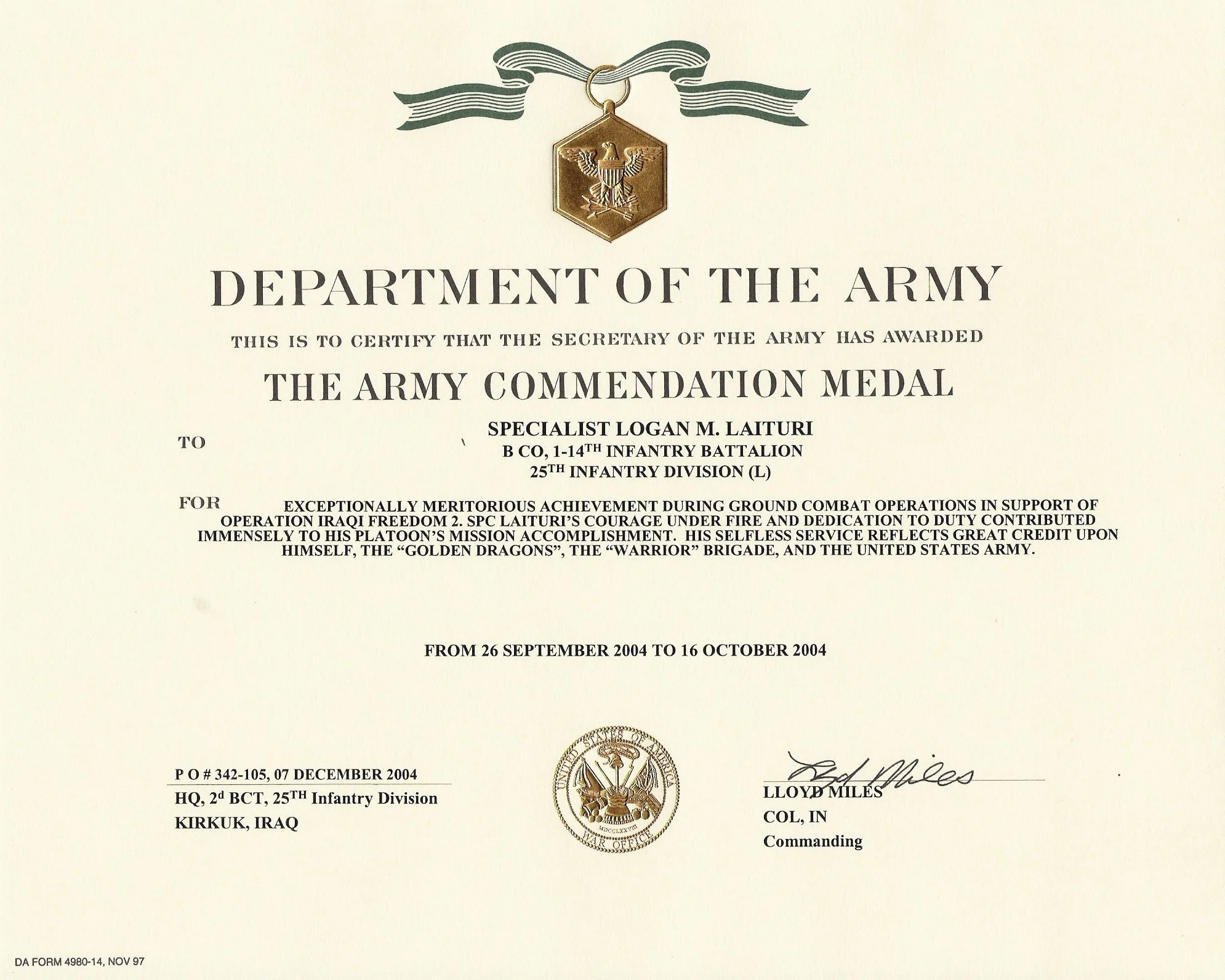
My actions didn’t qualify me for a Bronze Star, but let’s pretend my officers thought an ARCOM was not exactly sufficient. They could apply to add a “V Device” for Valor, especially since the incident described took place in combat. Here were the itemized descriptions included in my combat ARCOM;
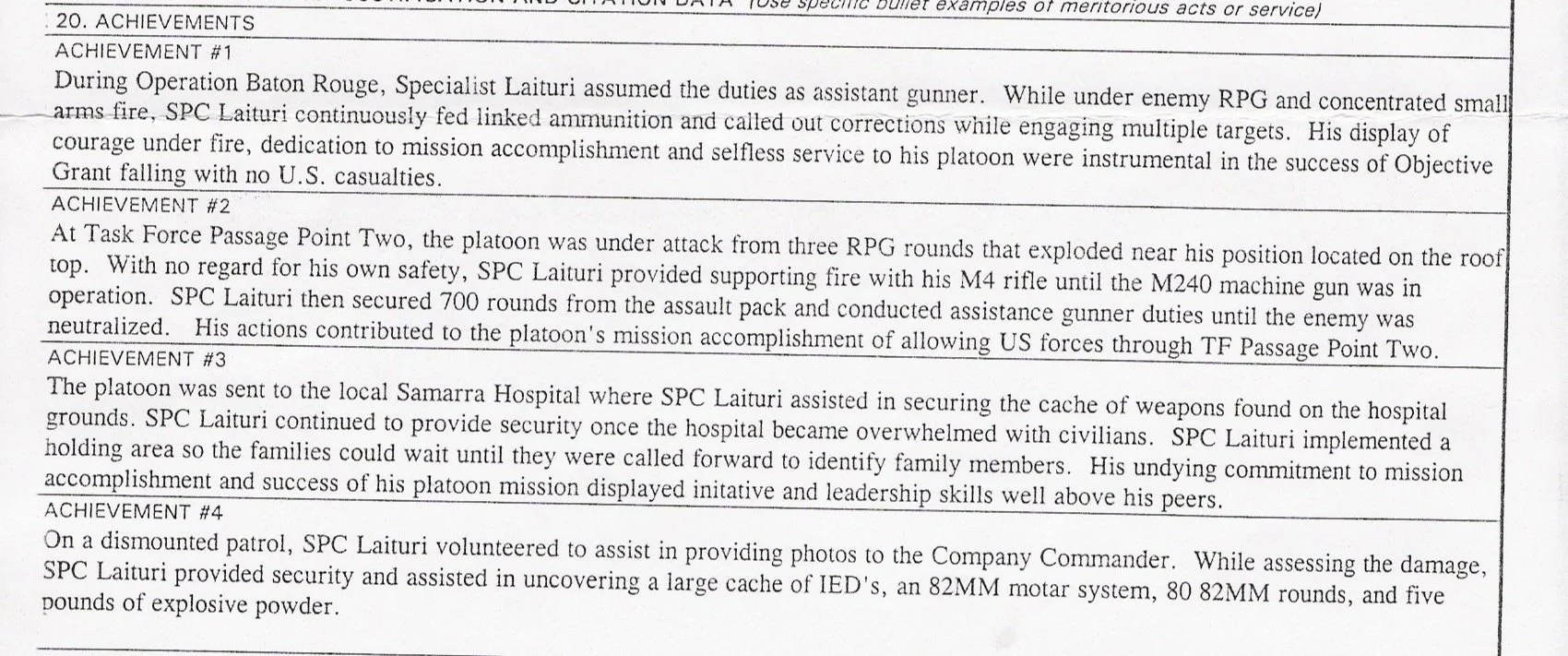
I don’t remember the actions my records describe, but it is not uncommon to send a Soldier up for a medal to cover a series of actions over time, when memories become fuzzy and have to be recreated. Or even embellished; conducting “assistan[t] gunner duties” was only noteworthy because I stepped out of my role as an artilleryman to assist the efforts of my platoon when my specialty was not needed. An infantry soldier doing the exact same thing wouldn’t merit so much as a pat on the back for a job well done.
…Stolen
Stolen Valor is not just about awards, however, it’s about any service claimed that was not actually performed. And we military veterans can get pretty nit-picky about it, like when Walz referred to his service in support of combat operations in Italy as being “in war.” While technically true, it also was an overstatement that played on intra-mural tensions within the military community. It was rich, in my artilleryman eyes, for a POG like Vance to attack the service of a senior NCO for political points. Nobody gets to choose when or where they deploy, and Vance was splitting hairs in the hopes he might curry some votes from other REMFs insecure about their own service. To split them even further, Walz likely chose a combat specialty, but Vance definitely didn’t. 🤷
See how the tension has even more texture when you see things from the inside? That’s why you should let me teach you how to love your military neighbor! My rates go up in 2025…
The Vice Presidential Tea notwithstanding, Stolen Valor most often occurs when a civilian wears a military uniform. There are whole YouTube Channels devoted to outing civilians stealing valor, because every uniform necessarily includes claims of particular service. Service members are trained to identify each other quickly, within seconds; do I need to salute this person passing by? is there a unit-specific greeting I need to use? how can they make my life difficult if I pretend I don’t see them? We dissect every item of clothing because each patch, badge, and tab tells a story.
Each patch, badge, and tab builds a story.
Military stories are about power; who to salute and when, who has my back and why, what can you make me do if I piss you off? That’s why Stolen Valor videos often start with the equivalent of “what’s your story?” If I am to believe you are who you claim, then how TF are you screwing up something as simple as your uniform? In most videos, the accusing veteran has already determined, to within a 5% margin of error, that a given target is a civilian. Videos you find online are not documenting Stolen Valor research, they’re outing insecure civilians cosplaying as one of us.
Seriously?
Military stories are so powerful that they can even generate revenue, most of which gets gobbled up by civilians though. According to one report, for his war (showbiz) work in the sixties, John Wayne “had been paid as much as $666,000 to make a movie.” During the war in Viet Nam, the highest ranking general was only paid about $3,000 a month. Ain’t nothing valorous about that, but it technically wasn’t theft I guess…
As for the Rambo franchise, which earned nearly a billion dollars, it wasn’t even an American civilian that dreamt that shit up, it was a Canadian! David Morrell, who never served a day in his life, adapted First Blood for the screen in 1980, the same year “Posttraumatic Stress Disorder” was added to the third edition of the Diagnostic and Statistical Manual of Mental Disorders.
The Hurt Locker was pretty damn profitable, but when the service member they based their work on sued them for defamation after losing promotions over his perceived mental health, Mark Boal and Katheryn Bigelow countersued him! The Explosive Ordinance and Disposal (EOD) grunt that they 👏 followed 👏 home 👏 from 👏 war had to pay their attorneys fees because, I shit you not, “soldiers don’t have privacy.”

Maybe Americans don’t take stolen valor seriously enough. If we did, maybe veterans wouldn’t get so fleeced when it comes from reaping the benefits of their own labor.