Durham Herald Sun
After the war: Coming to grips with faith and service
Article by Dawn Vaughn published on November 11, 2011, by the The Herald Sun of Durham, NC.

DURHAM – In the year after his return from serving a tour in the Iraq War, Army soldier Logan Mehl-Laituri had time to reflect on what he did reflexively in combat. Along with the night sweats came exposure to deeply religious Christians. Eventually the active duty paratrooper had a moment when he decided that his Christianity had to become part of his professional life.
“What do I do? I blow stuff up,” he said. Mehl-Laituri didn’t ask to leave the Army, but no longer wanted to hold a weapon. That was in 2006. Since honorably discharged, Mehl-Laituri is a student at Duke Divinity School and behind a group that addresses how society and faith communities can support veterans.
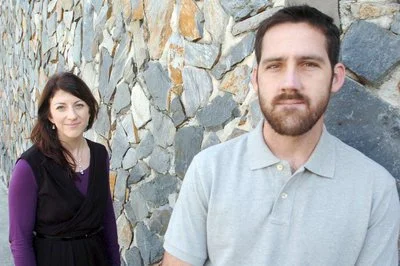
It’s not appropriate to ask a veteran if he or she killed anyone, said Alaina Kleinbeck, who started the Duke student group Milites Christi with Mehl-Laituri. The group is holding an event today and Saturday called “After the Yellow Ribbon,” to address how to support someone in the Armed Forces regardless of your feelings about war. The keynote speaker is U.S. Military Academy at West Point ethicist Lt. Col. Pete Kilner, who will speak at 6:30 p.m. tonight on “Making Sense of the Beauty and Tragedy of a Combat Deployment” at Goodson Chapel.
When Mehl-Laituri was in orientation at Duke Divinity last fall and finding out about counseling services, a counselor said they could come discuss anything, even if they killed someone. While some students laughed, Mehl-Laituri did not. He wasn’t the only war veteran at Duke Divinity then, or now.
“My entering class didn’t understand there’s an entire generation dealing with that,” Mehl-Laituri said.
How to deal with the current generation of veterans returning from the wars in Iraq and Afghanistan is something that society, and specifically churches, need to address, he said.
Mehl-Laituri joined the Army in 2000 at age 18. An artillery forward observer, he spent 14 months in Iraq, from 2004 to early 2005. Part of a Quick Reaction Force, his battalion moved in wherever needed, so he never spent more than a few weeks in each location across Iraq. In 2008, he was diagnosed with post-traumatic stress disorder.
Kleinbeck, a second-year master of divinity student who has worked as a youth minister, said she wanted to be a part of Milites Christi because of her friendship with Mehl-Laituri and wanted to foster safe environments for those like him to share their experiences. The group aims to create awareness on campus and in faith communities that their members are veterans, and to understand them as people with real experiences.
“I’ve noticed a hesitancy among pacifists to engage persons who serve in the military,” she said. Or, if their political and theological position uplifts a more patriotic view, she said, that can sometimes heroicize those who have had horrific experiences. It’s that tension between hero and villain they want to throw out, she said.
Mehl-Laituri said he walks between those worlds.
“I support love of country, and conscience. I asked to go back to Iraq, without a weapon,” he said. Mehl-Laituri didn’t want to leave the Army, but he said quite clearly he would not be involved with killing people again. He submitted papers to be a noncombatant conscientious objector, but was eventually honorably discharged. He became part of Iraq Veterans Against the War, went on a Christian peacemakers team trip to the Middle East, finished his undergraduate degree in Hawaii, and then applied to seminaries.
He’s nervous when he approaches someone in uniform with fliers. His commander had called him a coward and a traitor. He doesn’t tell religious people they shouldn’t join the military, but to discern where they draw the line.
“God and country is such a part of the national narrative that the line gets blurred. I’m trying to pull God and country apart long enough so we can tell where that thin red line is,” Mehl-Laituri said. His line was using a weapon.
TO LEARN MORE
WHAT: “After the Yellow Ribbon” keynote address by Lt. Col. Pete Kilner, “Making Sense of the Beauty and Tragedy of a Combat Deployment”
WHEN: 6:30 tonight, followed by a reception
WHERE: Goodson Chapel, Duke Divinity School
INFORMATION: Tonight’s talk is free and open to the public. “After the Yellow Ribbon” will also include panels and workshops all day Saturday, with registration fee. To register, visit sites.duke.edu/aftertheyellowribbon/.