Soul Repair Testimony
Delivered at the launch of Brite Divinity School’s Soul Repair Center in 2012.
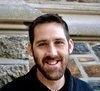
Thanks for having me. My name is Logan Mehl-Laituri. I didn't prepare anything, and I usually do—I did at the Truth Commission, because otherwise I usually sputter around and ramble.
My first interaction with Soul Repair Project and the Truth Commission was through Rita Nakashima Brock in the class that a number of seminary students did in preparation for the truth commission. We studied what truth commissions are in 2010.
For the most part, as a veteran I was told what my place was. I was generally expected to fall into certain narratives and stereotypes, which were not too dissimilar to those that I experienced leaving the military in 2006. I actually applied to be a non-combatant conscientious objector within an infantry unit. I told them: as a Christian, I cannot be directly responsible for ending the life of another human being. But as a Christian who's called to service to the world, that didn't feel to me as though that was calling me out of the military. The problem was I was in an infantry unit as an artilleryman, and so that meant that I was asking to return to war—which would have been my second deployment—without a weapon. It didn't work out.
But what I saw in that experience were these two extremes within which veterans and service members seem to have been expected to comply. On the one hand, I was a hero, I was a patriot, the kind of crusader mentality that most churches fall somewhere in between. But on the other hand, I was a monster and a baby killer. I was in Hawaii at the time, which is mostly a liberal, progressive kind of area. But most of the Christians I was in conversation with were suggesting that the military was God's hand of judgment in the Middle East. As a pacifist, I was not only aiding the enemies of America—which is what my commander told me—but I was abandoning the women and children I swore to protect from militant Muslims—which is what my pastor told me.
So I was living between these two extremes, in the middle of which was this white chasm that I was trying to find my place within. As I learned about the Truth Commission, I was faced with the possibility of understanding my own service, my own combat service, in terms of injury and pain and wounds.
Camilo and I were both at the Winter Soldier investigation in March of 2008. I testified, but I was very guarded. If you look at my testimony, I think it kind of speaks for itself. But when I was invited by Rita and Gabriella to speak, I kind of let go a little bit more. I think you'll see a departure in my testimony from Winter Soldier to the Truth Commission, because it gave me—they did not tell me what to say, which is a gift and a curse because I don't know what is expected of me. But it gives me free rein to narrate my own story, to identify myself on my own terms, which is what often churches don't really know how to do.
In the world of binaries, we want to assign people to one or the other camps—one of which, of course, we belong to: that's right. And the other, which you/they/I do not belong to: that's wrong. The trouble with the line between patriotism and pacifism, or church and state, is that the line doesn't always fall exactly where you might expect.
For myself, I began really digging into tradition and Scripture. I find it absolutely imperative that churches discern what it means that an occupying Roman military soldier was, on the one hand, the one that mocked and abused the detainee that we call Our Savior, Jesus Christ. And on the other hand, he was—possibly or possibly not the same soldier—the first to confess that same person as the Son of God before any disciple, before any apostle did. What does it mean that Cornelius, who's a Roman military commander—not just some Gentile, but a representative of the military occupying force in Judea—that this was the person who was the first Gentile baptized into the church without circumcision? That's something that other social forms—the form of the centurion, the form of the soldier—that other things we describe don't have access to.
And if we're able to articulate those stories, at least the scriptural stories, in ways that are not partisan, that are not assuming "us versus them," I think what we'll find is that soldiers and service members and veterans—when they realize that their own story is integral to the gospel witness—you'll find that they will be much more invested in the life of faith of the church.
I was asked—I continue to get asked by pastors I met at Duke Divinity, where we're training seminarians to be pastors primarily—they always ask me what it is they could do on Veterans Day. This is only the eighth time in 54 or 58 years that it's falling on Sunday. And I told them: if you try and tackle this issue, it'll be difficult. You'll step on toes. The people that you're ministering to will have this sense—combat has this effect of making us feel as though we know or feel or experience things in a deeper way than your common church member.
When I was in the military, when I was wearing my uniform, I could look to my left and my right and I knew that I would die for those people and they would die for me. When I go to church, I don't have that same certainty. A lot of what I've heard from other service members is similar sentiments: that they don't—the paradigmatic "you don't know because you weren't there" has a lot of problems, but it also has some credibility. There's something about particularly combat in military service that the wider church has not done well, at least since the Crusades and possibly even earlier.
But part of what that can do is create this hierarchy of service between combat veterans and non-combat veterans, and whether or not, you know, who is more of a victim or who is more of a hero. And that's really problematic, and I don't exactly know how to overcome that.
But as I continue to study church tradition, I became very interested in Catholic tradition, and particularly the beatification of individuals into sainthood. In the third century, shortly after Christianity became legalized—prior to which every single soldier-saint, every single military saint, was also martyred for confessing that they were a soldier of God. It was not permissible for them to fight or to worship Caesar. All of them were martyred on the spot, more or less.
Until this young man, this Frenchman by the name of Martin, who was reluctantly conscripted into service. He was named after the god of war. His father was a veteran. He was conscripted to the Praetorian Guard to guard Caesar, so he was kind of like Secret Service. And he spent a couple years in, and he encountered a freezing beggar in Amiens. He split this lambskin cape in half in order to clothe this freezing beggar—it's what the episode is most known for. Later that night, he has a dream of Jesus telling him, or telling the heavenly host: "Here is Martin, my servant, who is not even baptized."
He goes off the next day, becomes baptized. And most of the times I've heard that story narrated, it's assumed that then, like every other soldier-saint before him, he departed military service. Actually wasn't true. He was conscripted in 331. It was probably about 333 or 334 when it occurred. But he doesn't actually make his own confession until he accompanies Caesar Julian to the Battle of Worms in 356. So he spent well over 20 years in military service, never actually seeing combat, until Julian accompanies some battalion to war and he's faced with the imperative to wield a sword—not for the protection of life, but in organized service, in organized violence we call war.
And at that point he says, "I've served you long enough. Let me now serve my God." Julian has him locked up and he says, "If it is due to cowardice, not to faith, I will proceed to the front lines unarmed, protected only by the sign of the cross and not by helmet and shield." And miraculously, the Gauls negotiate a peace treaty, and he's then discharged as a conscientious objector.
And he dies and is buried on November 11th in 397. Sixteen hundred years before it became Veterans Day, November 11th was the feast day of a conscientious objector, the patron of soldiers and chaplains. The cape that he split in half then became a relic, and it was protected by what linguistically was the earliest form of the word "chaplain."
If traditions like these are able to be recovered and leveraged for the service not just of veterans, not just for combat veterans, but for the church itself—for its own enrichment, for its own more embodied fulfillment of the values and principles and the life that the gospel calls us to—I think you'll see that veterans will feel much less estranged when that middle ground is entered into. And their own gifts, the gift of the traumatic experiences that they hold within their persons—if when it is invited as gift, when it is acknowledged as something valuable to the formation and the instruction and the life of the church—I think that's when you'll see things like the soldier suicide rate begin to decline.
And I know it's my prayer. I hope it's yours.
Thank you for listening.