UNC TV
After the Yellow Ribbon Interview
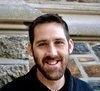
Interview by Mitch Lewis of UNC TV’s “North Carolina Now” broadcast on November 1, 2011.
AI Generated Transcript
This weekend Duke University is hosting the after the yellow ribbon conference the event focuses on how communities universities and churches can help promote healing for veterans conference organizer Logan military recently stopped by our Studios to tell us more Logan Mehl-Laituri welcome to North Carolina now thanks for having me now Logan you're a student veteran attending Duke Divinity School and you served in Iraq what do you see as some of the challenges that are facing student veterans um well there's really two there's a number of different challenges on the one hand there's the administrative Challenge and dealing with a VA making sure that you have tuition it's promised to you and navigating that maze but there's there's also the personal challenge of particularly students with combat experience but not not just climate experience I think service members in general as they leave the military service have a particular perspective that is unique but that also can be difficult to share at times and so I think there's different angles at which student veterans are challenged so it it depends on what it is that that we're talking about that uh that would that would matter most now talking about the the personal experiences you you encounter a personal experience as you were getting ready uh for school tell us about that experience sure um well I got out of the military in 2006 after I had spent um over six years in an artillery unit that spent most of their time with infantry and so I deployed in 2004 to Iraq came home I was discharged and uh was looking forward to school I got through my ba um and I came out to the diff school to study Theology and getting ready at orientation the um uh campus psychiatric program that Duke offers had a representative that came to orientation and he was sharing about doctor-patient confidentiality and I think it was trying to Enlighten the crowd he said about doctor patient confidentiality said uh you can tell us anything you can tell us that you kick your dog you're cheating on your test you're cheating on your spouse and he went on and on and he left the crowd with you can even tell us you've killed someone at which point uh the entering class in the lecture hall burst out laughing and for someone uh who who had a combat experience in Iraq where that was something that I would need to see a counselor for and I have seen counselors for it um it immediately set me apart from the rest of the class and created an estrangement that was very difficult to overcome it took me several weeks but then even as I did and I was able to see that that what occurred didn't occur out of malice it was it was really just a lack of understanding where I was coming from as a unique student in this in this community and as I continued there was there was something said that that because of my experience I had a heightened sensitive sensitivity to there's a number of people who identify as pacifists at the school I myself identify as a pacifist I was discharged after seeking status as a conscious subjector as a non-combatant to return to Iraq without a weapon um but when when somebody says or assumes that all soldiers go to war out of a sense of bloodlust that that affects me um but in another sense as well because the Divinity School school is also a Christian Community um training seminarians training pastors we also have to think about the theological ramifications of of our training we're going over Lamentations one day in Old Testament and one of the women said um you know I just don't get it I don't know I don't know why this is relevant we should just be clapping our hands and praising Jesus and um for someone who's gone through con what you know combat entails um I don't merely go to church to praise God uh or I only do that through the knowledge of how sinful and and and um horrible the world can be like the things I've seen enable me to have that joy and that that sense of praise and worship um and without it I wonder if it I wonder if it's if it's somewhat Hollow um and so there's a number of different things that as a new student I was facing I was really trying to reconcile and that's really what the event on over Veterans Day weekend is about is trying to um equip um particularly the academy and the church but also military families in engaging service members uh more meaningfully more productively because oftentimes things like that like if I were to tell the class how difficult it was for me to hear someone say well we just go to church to clap and sing or to tell the class that I you know that that entered with me that you laughed when something was mentioned that had a profound moral significance to me is difficult it's difficult to hear it's difficult to say but we're really trying to break down a lot of those barriers so that um the church and the University as a whole can begin to really de-abstract war and those who who conduct War and the event that you're talking about is after the yellow ribbon conference what well tell us some of the folks who will be there who will talk during this conference sure um we have gone out of our way to to get a wide array of of individuals so our keynote on Friday night at 6 30 in Goodson Chapel will be Lieutenant Colonel Pete Kilner who is an ethicist at West Point Military Academy in New York and he's written extensively on providing moral framework through which to understand the justifiability of killing in combat he's got a lot of heat from the Army for trying to say that no war is a moral act and we have to instill our service members with a sense of what it means to be required to kill someone but on the other end of the spectrum we've got uh Derek Webb who's a Christian musician and activist who has who has spoken and Son about how important it is to follow your conscience he wrote or he had an album put out in 2007 called Mockingbird at the end of which he he described this this event and in Texas I think where there was a near Mutiny because he was trying to say don't vote because you're supposed to vote your conscience and that may lead you not to vote so we're we're holding these two well they're not the only two I mean we've also got um people um there's a professor uh who holds a Catholic chair of theology at University of Dayton talking about liturgies for returning veterans we've got people from the VA who will be speaking in an official capacity so we've really got a lot of different things kind of in the mix we've got like I said Derek Webb who does music we've commissioned a brand new um icon of Saint Martin of Tours who is the patron saint of soldiers and chaplains who is the first Soldier Saint in the 4th Century not to be martyred for refusing to fight and so we're really trying to pull in a a very diverse set of of backgrounds in in the attempt to begin cultivating meaningful constructive conversations about uh faith and service and if folks want to find out more about after the yellow ribbon conference where can they go the best place to go would be sites.duke.edu after the yellow ribbon we also have a Facebook page for the student group Duke militis Christie and that's usually where we've been posting most of it but the schedule and how you register both on the sites webpage finally a two-fold question for you because you have witnessed combat firsthand in Iraq how are you dealing with some of the things that you have witnessed while in Iraq and what advice would you have to people when it comes to interacting with veterans especially those who have been in combat um but I think I've dealt with it um I think the church has been an incredibly important but troubling community in which to find um reconciliation with myself I tell people that families lose lose people they love in war and I did too I lost a part of myself when I deployed and I want to take very seriously the fact that war is a significant moral task that um that but that we we need to get away from robbing people of the Nuance of service I don't want anybody to to villainize or venerate our veterans because I think whether you call someone a monster or a hero they they prevent us from being fully human humans make mistakes they they make incredible successes but if I'm a hero I can't have made these horrible mistakes and I can't witness this and if I'm if I'm a monster then I can't be capable of of redemption and I think the the most important thing that you can offer someone who's been to to combat or who has just been a military service and who struggles with that um is to just be a friend um and I mean that in the deepest sense possible when um when people come home we want to we want the details I found that people want to know someone's killed someone and that's the absolutely the worst thing you can ask because it it it immediately insists upon vulnerability and if that if the the real depth of friendship isn't there then they they'll expose themselves to to someone and and they won't have anywhere for that experience to go and so I think we need to be ready to listen um we need to create something like what the church calls confession in public spaces um and be ready to absorb the experiences that are valuable and that can help form both the university and the church but that must be evoked in a way that does not compromise their their moral or mental health Logan Mel latouri coalizer of after the yellow ribbon conference thank you so very much for your service to your country and continued success to you sir thanks a lot I appreciate it that's our show for tonight thanks for watching have a great evening everyone