UUFC Sermon
"He interpreted all the things… about himself" (Luke 24:27)
My message today is for maturing audiences. As a combat veteran, I carry an obscene weight on my shoulders, a weight belonging to an entire nation. But my nation has been sick for a long time, at least a generation, and cannot share the weight it places upon veterans like me. I am here hoping that none of us are done maturing, even as some of us may be just starting out. If anything I say feels too obscene for you to carry, I will not be offended if you politely and quietly excuse yourself, because we are all at different places on this journey together.
I. The Road to Emmaus
In the Christian lectionary cycle, the text for the third Sunday of the Easter season is Luke 24:13-35, a passage you may have heard called The Road to Emmaus. Two Passover pilgrims, their backs to the so-called "holy city," quietly commiserate about the violent suppression of yet another failed messianic coup. A stranger surprises them from behind; "Whatcha talkin' about?"
Hardly able to believe someone coming from Jerusalem had NOT heard what happened, the one named Cleopas proceeds to explain everything from Good Friday to Easter. When he finishes, the stranger is equally flummoxed — "Wait, you mean you were surprised this happened? Haven't you read our scriptures?" Then the professorial fellow-pilgrim proceeds to explain everything from Moses, the mythic founder of their faith, to Malachi, the last of the Hebrew prophets. To conclude his walking lecture, Christian scripture says "he explained to them what was said in all the writings concerning himself." (v.27)
The original Greek word used is diermēneusen; he interpreted, systematically, everything Cleopas and his friend could not see for themselves, including himself. The faithful friends had failed to fully appreciate that Good Friday, the violent overcoming of evil by good, is a mirror of Passover. It was not information they lacked, but an interpretive method. The fancy word for which is hermeneutic, from hermēneuō, after the Greek messenger god, Hermes, who translated souls between life and death.
The disciples had the same texts the stranger cites, the same scripture. They lacked a method. Their eyes were "kept from recognizing" (v.16) — something structural was blocking their sight. It wasn't their fault they failed to recognize the moral of the story they watched unfold. The stranger doesn't give them new facts. He gives them a new hermeneutic. That's what I want to talk about today. Not a reading method for scripture — a reading method for people. Specifically, for a community that has been systematically misread.
II. Civilian Privilege, Civilian Theology
While working on my first graduate degree at Duke, I had been interviewed for a story about moral injury, a topic I had been involved with since 2009, including the founding of the Soul Repair Center in Texas. A writer was profiling a professor of mine and their article had been picked up by Christianity Today, arguably the most influential evangelical magazine in America — founded by Billy Graham, still read by millions. An editor emailed asking if I was willing to be photographed for the story. She already had a professional photographer lined up since they had recently profiled NT Wright, a professor of mine at St Andrews.
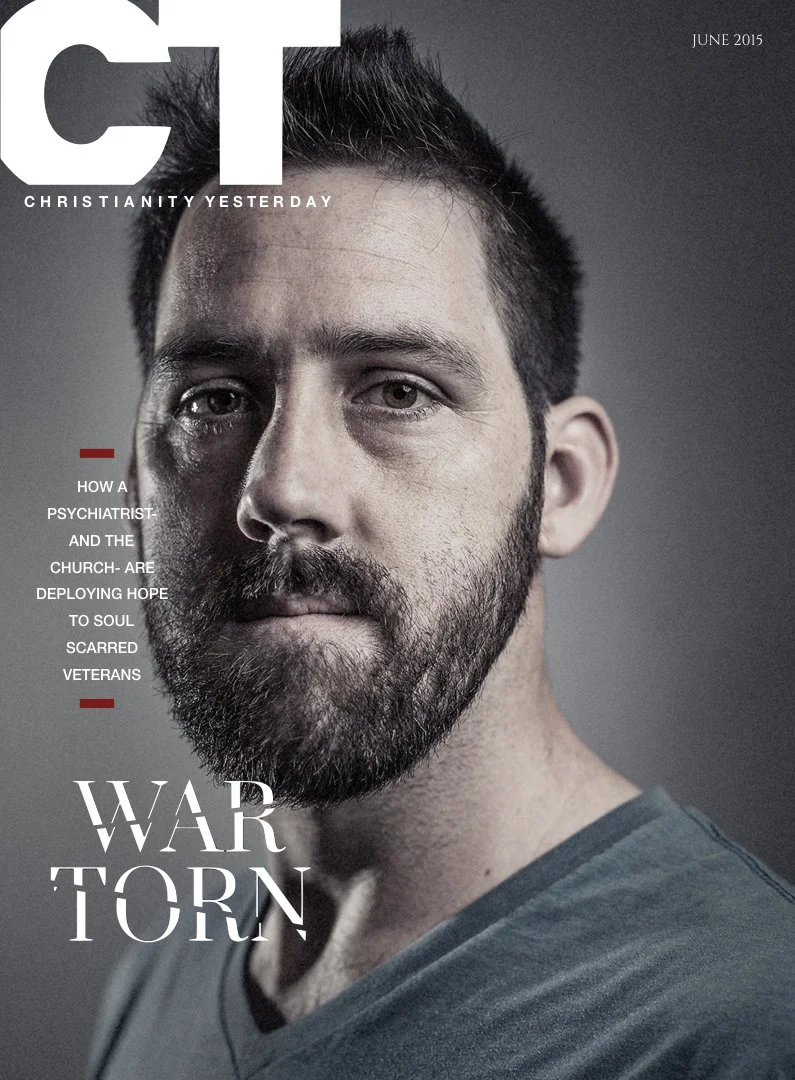
This is the June 2015 issue of Christianity Today. For those who can't quite make out their headline, it says "War Torn: How a Psychiatrist and the Church are Deploying Hope to Soul Scarred Veterans."
I did not see what they did until an editor posted the magazine to Instagram, at which time I immediately knew the story was not for me or anyone like me. In fact, every student veteran named in it formally demanded their likeness be removed, which CT did. But the damage was done; the print edition was already in transit to every seminary in the English speaking world.
The story was not an outright lie — editors simply magnified certain facts to buttress their own biases rather than challenge them. I'm not ashamed of having a PTSD diagnosis, and nobody should be. But selectively focusing on a few elements to tell a myopic, self-congratulatory narrative is exactly how believers, like Cleopas and his friend, are kept from recognizing what really matters. It is how sheep are led astray, how people get hurt, and how empires fall.
This pattern isn't new. Who can remember when so-called Believers failed to recognize the human dignity of other minorities? Yesterday's Christianity would have run headlines like these;
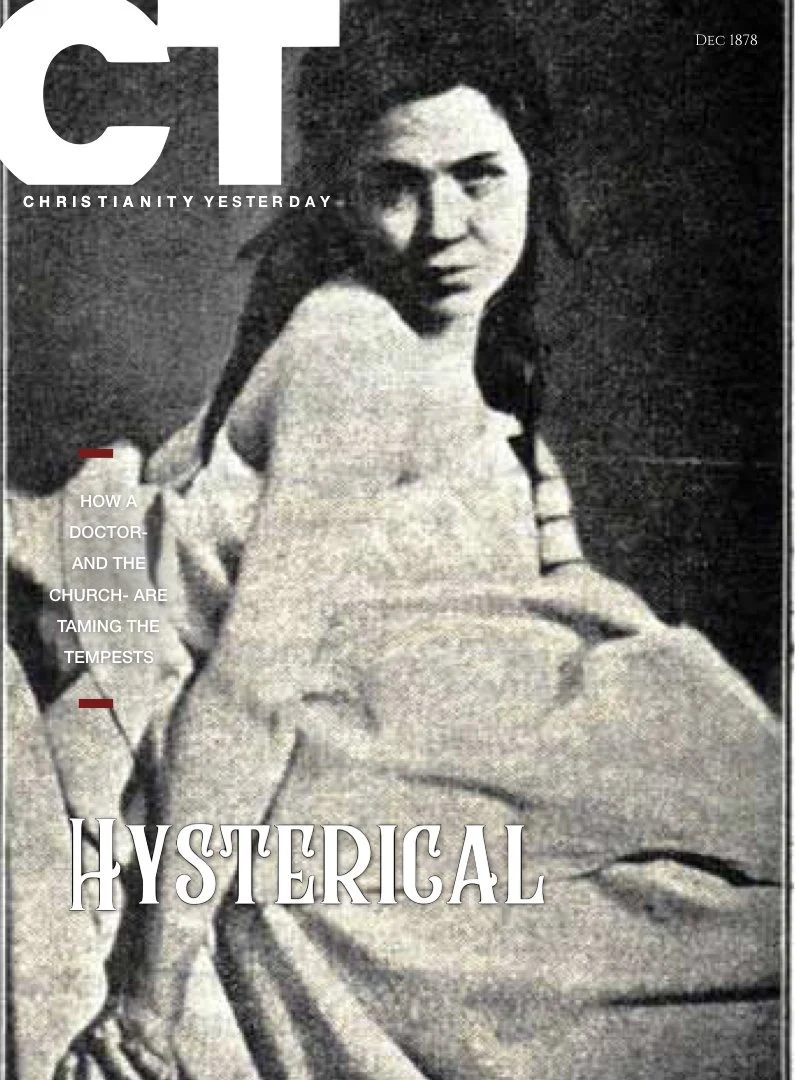
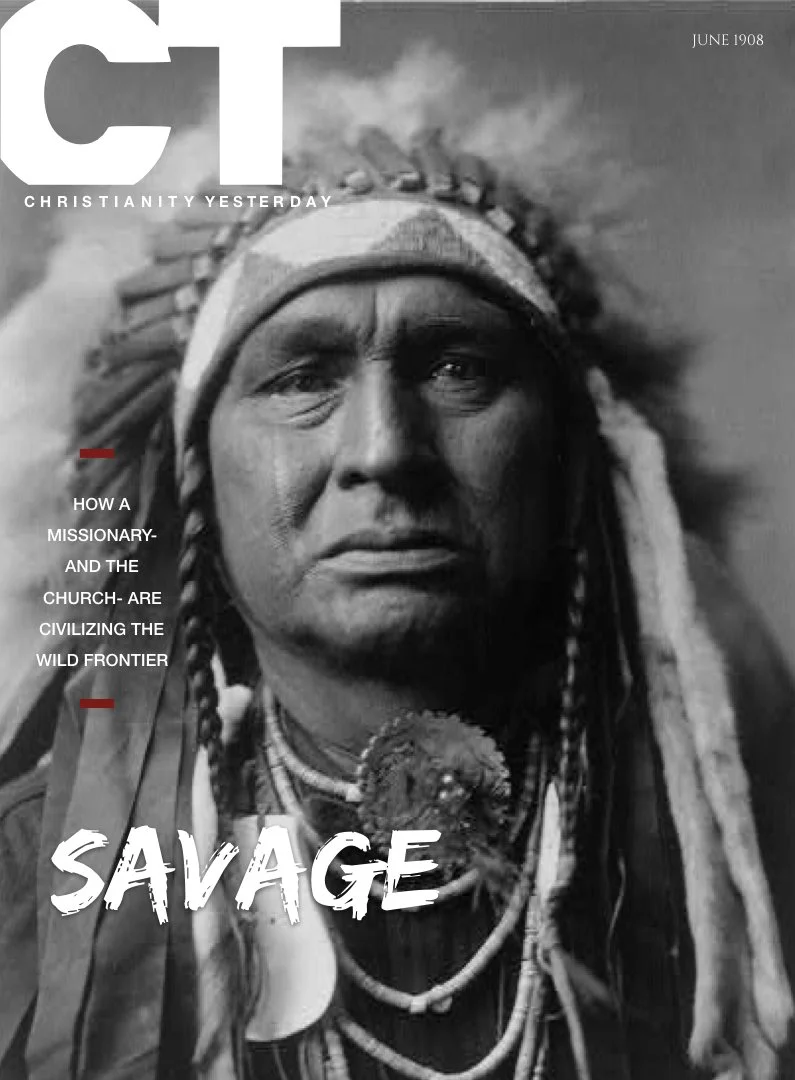
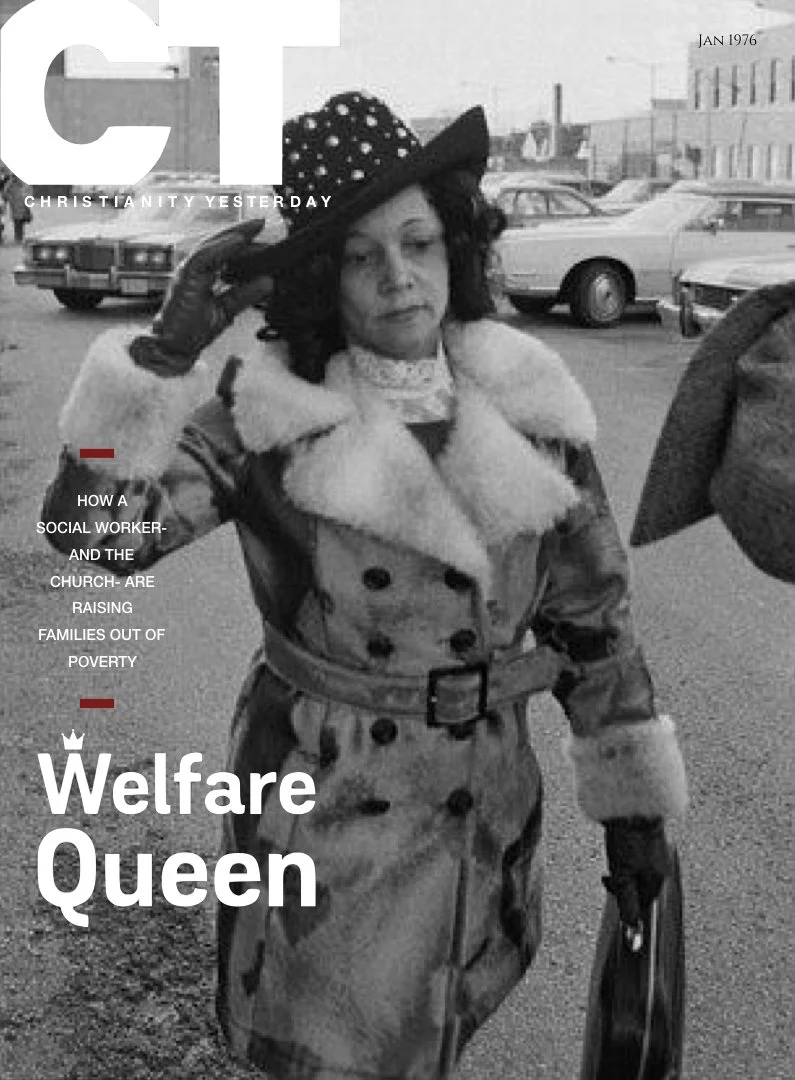
Civilian theology is what's left when embodied experience has been removed from the interpretive process. When sexism diagnoses women, when colonialism narrates indigeneity, when racism enforces superiority. It's rarely malicious. It's usually just trained incapacity, the same one the disciples had on the road. They had all the right scripts. They just couldn't see who was walking beside them because they didn't see the bigger picture within which those scripts could hold more meaning than they thought possible.
Moral health is about knowing the shape and arc of your own life and the story it tells. Some people will treat you as smaller than you are, out of fear or jealousy. Others will treat you as a slightly different shape than yours altogether. The "War Torn" article correctly identified that veterans carry something profound, but handed the interpretation of that something to people who had never carried it, within a commercial model that depends on attention for survival.
III. Moral Health
Caring for your moral health is rhythmic, cyclical. It ebbs and flows like any organic system, so you should be prepared to rise and fall somewhat with the tide. The only force powerful enough to move your life's story is community. The groups you belong to are like anchors — they contribute to the formation of moral persons through time tested rituals of meaning-making. Religion is the name we give to rituals we endow with the power of meaning-making. Politics is the name we give to the enforcement of that power, and every political system relies on civil religion for moral authority. There are three states through which a conscience constantly cycles: formation, fragmentation, and reintegration.
Moral formation is the braid that weaves individual experience together with communal religion and governing politics. Culture is the spindle. What happens when that explicit formation comes into contact with the dark reality of misogyny and slavery? What happens when Others insist on being brothers and sisters of the same political family?
Moral fragmentation occurs when that formative braid begins to come undone, when individual conscience identifies its own religion or politics as flawed or corrupt. When a celibate priesthood abuses children. When elected politicians expect favors. When we draft the poor to make it easier to wage wars of profitable convenience. An ignored conscience ain't so bad if you know how to manage pain — a pill here, an Indulgence there. The soul is a muscle; you can train it to contract or dilate at will with enough practice.
Moral reintegration is the work of a community that recognizes its bond has become frayed and determines to reconcile individual consciences with collective consciousness. Individual moral sensitivity is inseparable from collective moral awareness; one conscience is a candle at the bright altar of consciousness. To keep the sacred fire going, a community cannot allow the darkness of capitulation to snuff out the flames of those least likely to conform. Reconciliation takes public service — leitourgia in the Greek — to keep our systems of meaning and power functional.
IV. Martial Hermeneutics
Cleopas and his friend were not blind, they just didn't see as fully as they could — "they were kept from recognizing" Christ. Luke doesn't name the force responsible for their selective sight, but I will: it's called bias. Having biases isn't to be ashamed of any more than having a diagnosis. My mom taught me that we all have biases, even if only some of us acknowledge them. Unfortunately, in some cultures people are trained to believe that all mistakes are a moral failure, which they're not. What is human achievement but a series of mistakes followed by recognition and correction?
To be fair, Luke's stranger does chide Cleopas and his friend for not seeing the wider picture. I'm not here to defend the culture that produced that reaction, I'm just here to examine it for the benefit of my own community. But notice when the realization occurs — not with the informative homily on Torah and the Prophets, not even with literally seeing this mysterious figure with their own eyes. Metaphorical and literal truth only collide when the strangers prepare to eat together:
"When he was at the table with them, he took bread, gave thanks, broke it and began to give it to them. Then their eyes were opened and they recognized him." (vv.30-31)
The hermeneutical shift opened the space for a more expansive communion than either pilgrim anticipated. Their eyes were fully functional, they lacked no formal capacity, even if the story they inherited proved insufficient.
A martial hermeneutic isn't a claim that veterans know better. It's a reading practice developed in trying conditions — moral complexity, institutional submission, proximity to death, organized violence — that most theological traditions have treated as background noise to be turned down rather than source material to mine for insight. Martin, Francis, Joan of Arc: the soldier-saints are not footnotes to Augustine and Aquinas. They are a tradition, albeit a suppressed one.
V. The Stranger on the Road
As soon as Cleopas and his companion recognized the stranger as Christ, "he disappeared from their sight." (v.31) When blindspots disappear, reality floods in. Not only are they not concerned with the mysterious disappearance, they immediately reinterpret prior experience through the new paradigm: "Were not our hearts burning within us while he talked with us on the road and opened the Scriptures to us?" (v.32) New sight is like that — you can't help but start using it to explore the new world that has opened before you.
The June 2015 issue of CT went to every seminary in the English-speaking world before anyone thought to ask whether the story was for us or about us. But here's what I know now that I didn't know then: the disciples on the road didn't need the evangelical industrial complex to get it right. They needed a stranger willing to walk with them until their eyes opened. The institution will always be a step behind. That's not cynicism — that's just how it works. The burning started on the road, not in the editorial meeting.
The disciples invited the stranger in because it was getting late. Likewise this age we are in feels dark, foreboding, dangerous. Something about the conversation on the road made them unwilling to let him risk walking alone — and so they pulled him inside, fed him, and watched their world change at a dinner table. That is the shape of the liturgical work I hope you’ll consider joining. Not charity toward veterans, not thank-you-for-your-service, not another magazine cover story — but the slower, harder work of military civil rights: the legal, political, and communal infrastructure that makes sure military families get heard as full citizens rather than managed as symbols. You can learn more about that work at GIJustice.com. I’ve been doing it for years in Congress and at state capitols, in the courts and, occasionally, in the streets — including, this past Holy Week, right here in Corvallis, when an act of conscientious obedience landed me in handcuffs.
I’ve learned to recognize the Divine in the chorus of voices in my head because it’s the one that consistently points me toward my full potential. It has never stopped pointing just because the institution was offended or afraid, nor will I stop pointing out that we can do better for military families. Raising a finger at the dumpster fire may be fun, but many hands make work light, and there’s a LOT of work to be done if we are to “proclaim liberty throughout all the land and to all its inhabitants.” If I’ve convinced anyone to become a civilian ally, I hope you’ll stick around after the service for a conversation, either here or at The Chapter House, my bookshop in Albany.
Thank you for your attention this morning.